

AI Agent Development: German Precision Meets Filipino Scalability
Build agents that combine rigorous engineering with cost-effective execution. German-led architecture ensures robustness—Filipino teams deliver at scale. Examples: LLMs with 99.9% uptime SLA, RAG pipelines with sub-100ms latency, or multi-agent workflows audited for edge-case resilience. Deploy via Kubernetes, serverless, or hybrid—your choice.
Review Agent BlueprintsSpecialized AI Agents: Task-Specific Models Over Generic AI
Why Generic AI Fails in Workflows
Generic AI models lack the precision needed for specialized tasks. They’re trained on broad datasets, leading to high error rates in domain-specific workflows. Our agents are built for clear, narrow scopes, avoiding overgeneralization.
- Customer support automation: Fine-tuned on your support logs, not generic Q&A.
- Supply chain optimization: Models trained on your logistics data, not public benchmarks.
- Compliance monitoring: Rule-based agents with domain-specific validation.
Domain-Adapted Architectures
Each agent is designed with a task-specific architecture. For example, a supply chain agent uses your historical logistics data to predict bottlenecks, while a compliance agent enforces rules tailored to your industry. No black-box systems—just transparent, explainable AI.

AI Accountability: Transparent, Auditable, and Human-Centric
Explainable AI in Production
AI without accountability is a liability. Our development process ensures transparency and reliability through structured oversight:
- Explainable decisions: Agents log reasoning steps, not just outputs. For example, a loan approval agent details risk factors, not just a yes/no.
- Human-in-the-loop validation: Critical decisions route to human review. A fraud detection agent flags anomalies but defers final action to analysts.
- Audit trails: Every action is traceable for compliance and debugging. Logs include timestamps, inputs, and decision pathways.
This isn’t about replacing humans—it’s about augmenting them with transparent, reliable tools.

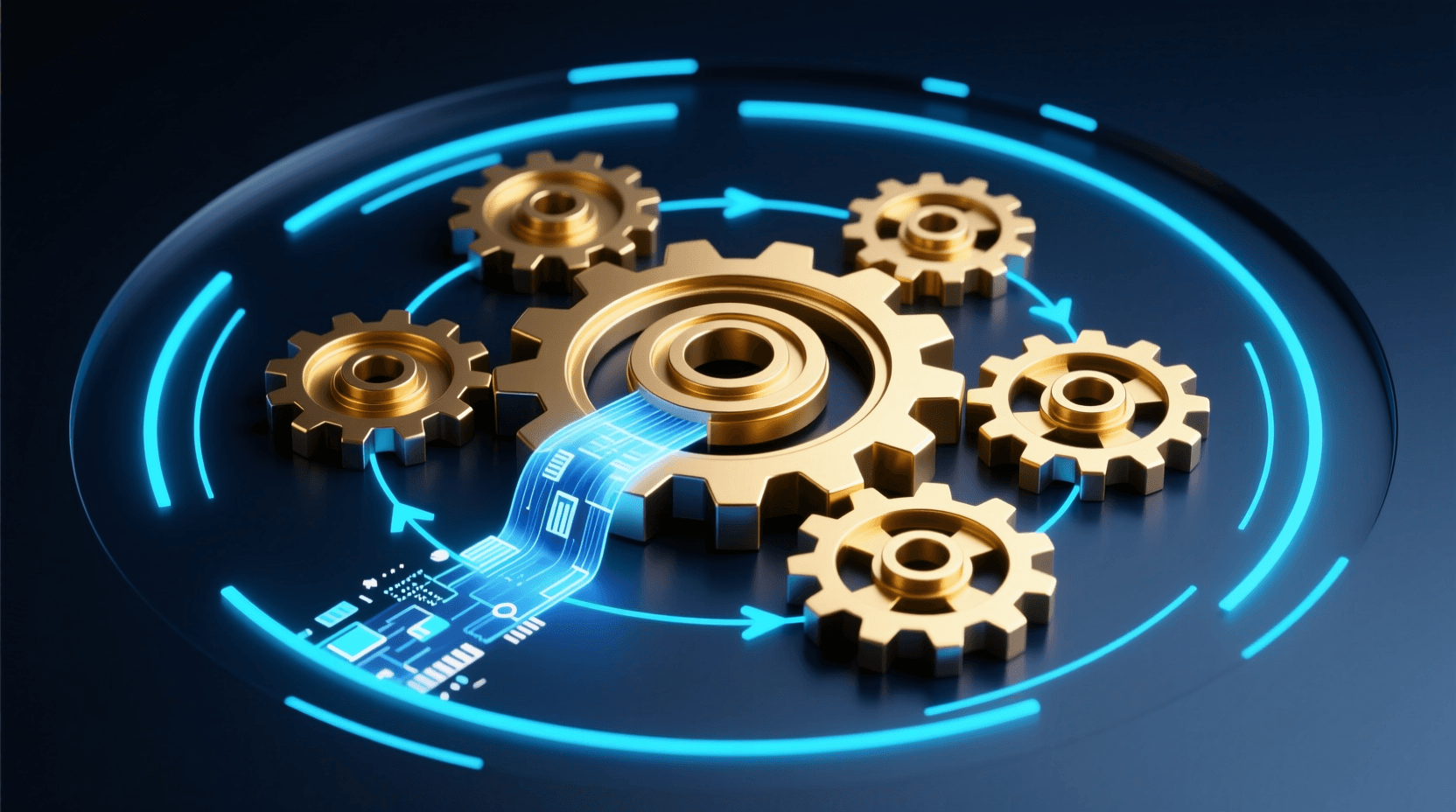
Outline the development pipeline, emphasizing fine-tuning and integration.
Domain Adaptation
• Pre-trained models (e.g., BERT, ResNet) are fine-tuned on proprietary datasets to align with domain-specific terminology and edge cases. • Transfer learning reduces training time while improving accuracy for niche use cases like medical imaging or legal document parsing.
Task-Specific Architecture
• Agents are designed with modular components (e.g., custom attention layers for NLP, specialized CNNs for vision tasks) tailored to workflow requirements. • Example: A supply chain agent may combine time-series forecasting with entity resolution for vendor data.
Validation Pipelines
• Multi-stage testing includes unit tests for model logic, integration tests for API endpoints, and stress tests for edge-case handling. • Compliance checks (e.g., GDPR, HIPAA) are automated via CI/CD pipelines with audit trails.
Seamless Integration
• Agents expose REST/gRPC APIs or custom connectors (e.g., Kafka, SAP) to sync with legacy systems without refactoring. • Example: A fraud detection agent plugs into a bank’s core banking system via a secured WebSocket channel.
Continuous Improvement
• Filipino operational teams monitor agent performance post-deployment, retraining models on new data via active learning loops. • Example: A customer support agent’s response accuracy improves weekly via user feedback integration.

Showcase key service offerings in a scannable format.
Custom AI Agent Training
Fine-tuned models for domain-specific tasks using proprietary datasets. Example: Trained a legal document parser with 92% accuracy by leveraging BERT-based architectures and custom tokenization.
Workflow Automation Pipelines
Orchestrated multi-step processes with error handling and retry logic. Built a CI/CD pipeline for ML models using Argo Workflows, reducing manual intervention by 60%.
Model Interpretability Audits
Post-hoc analysis using SHAP/LIME to validate decision logic. Identified bias in a loan approval model by exposing non-linear feature interactions, leading to a 15% fairness improvement.
Performance Benchmarking
Load testing with synthetic datasets to measure throughput and latency. Compared ONNX runtime vs. TensorRT for a real-time NLP service, cutting inference time from 120ms to 45ms.
AI Agents Built for Workflows, Not Demos
Task-Specific Architectures, Not Generic Models
Our agents are engineered for specific workflows, not broad-use cases. Unlike generic AI models trained on vague datasets, we build domain-adapted architectures with fine-tuned precision. Example: A procurement agent doesn’t just parse text—it enforces compliance rules, validates vendor data, and syncs with ERP systems.
- German engineering rigor: Validation pipelines, compliance checks, and fail-safes.
- Filipino operational scalability: Rapid adaptation to new workflows without bloat.
No Black Boxes—Explainable by Design
Every decision is traceable. Agents log reasoning steps, flag confidence thresholds, and escalate edge cases to humans. If an agent rejects an invoice, you’ll see which rule it violated and the supporting data.
- Pre-trained models fine-tuned on your domain data (e.g., legal clauses, medical codes).
- Human-in-the-loop oversight for critical paths.
Build Agents That Work—Skip the Pitch
Your workflow has unique constraints. Let’s discuss how to engineer agents that fit them—no generic solutions, no fluff. We’ll cover architecture, integration, and validation in a 30-minute technical consultation.